
Ask any commercial snow contractor what keeps them up at night, and somewhere on the list, usually near the top, is the slip-and-fall claim. The numbers are why. The Snow & Ice Management Association (SIMA) reports that commercial properties have roughly a one-in-six chance of facing a slip-and-fall claim each winter, and the average medical claim tied to a snow or ice incident now runs about $33,000. The National Safety Council estimates that snow- and ice-related slip-and-fall injuries contribute to more than one million ER visits annually in the United States. Whether or not you carry the contractual liability for those events, you will almost certainly be named in the lawsuit.
That is the operating reality of the commercial snow and ice business in 2026. And it is reshaping what property managers, insurance underwriters, and risk managers expect from the contractors they hire. The single biggest shift: the rise of proof of service as a non-negotiable requirement.
If your operation is not generating defensible, time-stamped, weather-correlated documentation for every site you touch, you are no longer just at risk during a claim. You are increasingly at risk of losing the contract before the season even starts.
A decade ago, a snow contractor could defend a claim with a paper log, a route sheet, and a credible operator who remembered the night in question. That defense is fading fast, for three reasons.
Multi-site property owners (REITs, big-box retail, healthcare systems, logistics operators) increasingly want one vendor across many locations and one source of truth across every storm event. They are asking for service records the same way they ask for COIs and W-9s: as part of the standard onboarding packet. If you cannot provide them, you are competing at a disadvantage against contractors who can.
SIMA has signaled that its 2026 roadmap includes a formal accreditation program centered on safety and insurability, with future phases expanding to a safety audit that members can present to underwriters. The direction of travel is clear: contractors who can demonstrate verifiable, repeatable service standards will be treated as a better risk than those who cannot. That gap is going to widen, not shrink.
In a slip-and-fall case, the discovery process now routinely includes requests for GPS logs, weather data for the site at the time of the incident, photos, application records, and any digital communication between the contractor and the property manager. A contractor who shows up with a well-organized record set is far harder to settle against than one who shows up with handwritten notes and a foggy memory.
"We GPS our trucks" is a starting point, not a finish line. The contractors winning the documentation conversation in 2026 are building a record set that holds up in three places simultaneously: in front of the property manager during a quarterly review, in front of an underwriter at renewal, and in front of opposing counsel during discovery. That record set generally includes five elements.
Not just route-level GPS, but per-site verification that a crew arrived, performed work, and left. This is the spine of any defensible record.
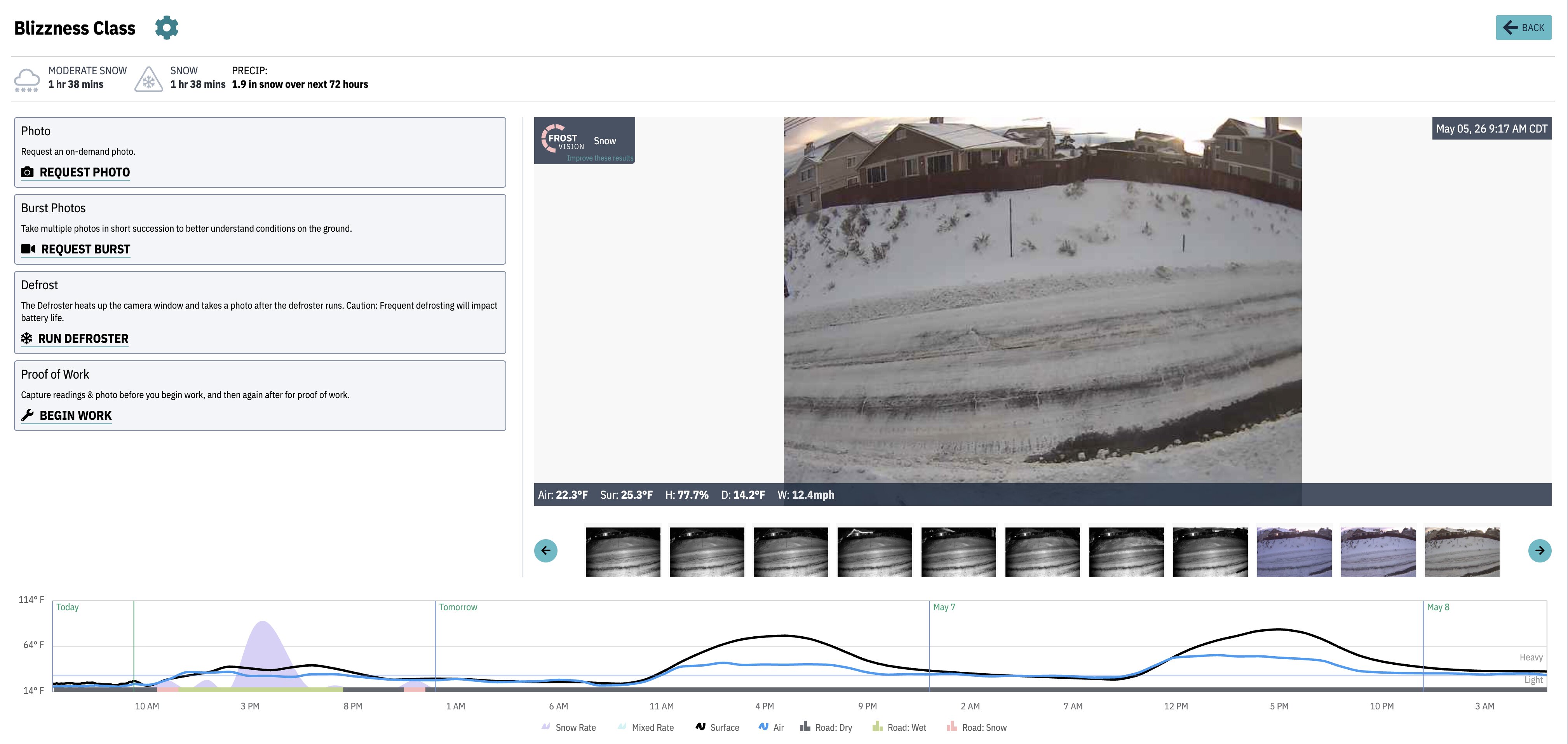
Images that show the site at the moment of service do two things at once: they prove the work was performed, and they document what the conditions actually were. A photo timestamped at 3:14 a.m. showing a clear lot is far more persuasive than a sworn affidavit claiming the same thing.
How much salt or liquid was applied, where, and when. This matters not only for liability defense. It matters for billing accuracy, for environmental compliance, and for the increasingly common conversation about chloride loading in stormwater.
This is the part most operations underweight. A claim notice that says "the snowfall ended at 11 p.m. on the 14th" (based on a regional airport observation) can fall apart when the actual pavement at the site in question was below freezing and receiving freezing drizzle until 4 a.m. Site-specific weather records, including pavement temperature, dramatically strengthen the timeline. They also show when service was correctly not performed, which is just as important.
If your weather observation says the surface bonded at 2:50 a.m., your dispatch log shows the crew rolled at 3:05 a.m., your timestamps confirm arrival at 3:32 a.m., and your invoice reflects the application made at 3:41 a.m., you have a story. If any of those links are missing, you have an argument.
From reviewing how slip-and-fall cases against snow contractors actually unfold, three patterns repeat:
All three are preventable. None of them are prevented by working harder. They are prevented by working with better infrastructure.
May through September is when contractors who are serious about documentation actually build the systems they will lean on in January. Trying to roll out a new proof-of-service workflow during the first storm of the year is, charitably, a bad idea. The crews are exhausted, the dispatchers are scrambling, and the technology learning curve runs straight into a 2 a.m. event.
Off-season investments that consistently pay back during winter include:
Here is the thing most contractors miss when they think about proof of service purely as a defensive measure. The same record set that defends a claim is the record set that supports a higher bid.
Property managers who have lived through a contested incident, and most of them have, will pay a premium for a contractor who walks into the renewal meeting with a clean documentation package, a year of weather-correlated service records, and zero billing disputes. The contractor down the road, with cheaper pricing and a route sheet, looks like a liability waiting to happen.
In other words: the contractors who treat documentation as overhead are likely to get squeezed on price. The contractors who treat documentation as a product are the ones building real margin and real durability into their accounts.
Frost Solutions exists because the gap between regional forecasts and on-site reality is the single biggest blind spot in winter operations, and that blind spot is exactly where claims, chargebacks, and contract losses live. Our mini-weather stations put pavement temperature, atmospheric data, and a verified visual record at the sites that matter, in densities that legacy RWIS networks cannot match. Combined with the Frost software, that data turns into the time-stamped, weather-correlated, location-specific record that defends accounts and wins renewals.
The off-season is the right time to plan that out. If you would like to walk through what a proof-of-service deployment would look like across your top accounts before next winter, schedule a demo with us and we will show you exactly what the data looks like, from the storm to the courtroom.